

For over a decade, the Venture Capital industry treated B2B SaaS as the holy grail. With good reason, admittedly: recurring revenue is sticky and annual subscriptions can be in the millions. Little has changed in the time of Artificial Intelligence. “Quality of revenue” is a phrase we hear frequently, and in many cases I use it myself, often as a euphemism for subscription revenues to a large corporate.
Meanwhile, the physical world has been frequently overlooked. Investing into consumer goods was often limited to angels and a narrow set of specialist VCs until the businesses made north of $20m revenue: why take on GSK or Proctor & Gamble if you could be the next Salesforce or Uber?
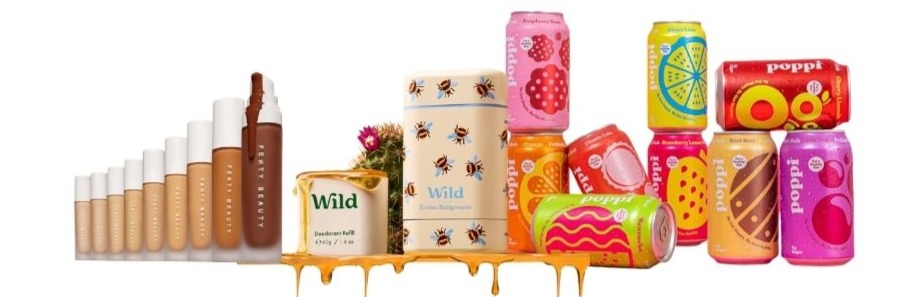
In the past decade, however, a wave of new global brand shave emerged, with unicorns across cosmetics, haircare, sports nutrition and many more verticals. Time to launch is lower than ever and social media has not only opened more Go-to-Market (GTM) channels but has also made consumers more willing to try something new.
For Limited Partners (LPs), the path to liquidity is no longer continuous dividends after 15 years of building. Exits are becoming increasingly common: incumbents need to protect their turf as the conglomerates are not set up to innovate internally, and internally-built brands lack the same authenticity as the challengers.
Unilever has dominated the deodorant and soap space for years, with Rexona (Sure), AXE, Dove and Simple. In 2025, however, they acquired Dr Squatch ($1.5bn) and WILD ($286m) at revenue multiples a SaaS business won't match currently, according to the SaaS Capital Index.
PepsiCo acquired Poppi (probiotic soda) for $1.95bn in 2025. Senior executives admitted they could not replicate Poppi’s “magnetic” brand in-house. Pepsi tried (and failed) to launch their own prebiotic drink: acquiring Poppi, or a competitor, was the only way to play in this fast-growing segment.

In Saudi Arabia, the opportunity is vast. The market has the perfect combination of two major factors:
- Outdated products, sold by distributors with outsized influence and sitting on repeat margins. Quality (and service) lags far behind what consumers deserve.
- The fastest-growing consumer market globally, according to PwC
- Transformational social shifts and economic empowerment
- Very young population, born into social media, coming into their spending years
- A fierce sense of national pride with the foundations laid by a government looking to drive Saudi-made, Saudi-owned products.
Saudi consumers deserve better. The legacy consumer market has been "good enough" for too long. Incumbents relied on iron-fisted control over retail shelves. All the while, Saudi Arabian residents have seen what’s possible globally on their travels, or via TikTok and Instagram, and are tired of being treated as an afterthought.
Our convictions have led to a strategy of backing exceptional founders who are not only building brands, but addressing pain points across the value chain for the entire ecosystem to benefit.

Spark & Ace: a Venture Builder studio for Direct-to-Consumer (D2C) brands to launch natural, high-quality consumer products alongside well-loved celebrities with an authentic connection to the product. Having successfully disrupted the baby skincare market in the UK, building the best-selling Nala’s Baby brand alongside a British rap artist,Shaz Saleem and Alex el-Nemer set up Spark & Ace to replicate that success across household goods, with 2 GCC-focused products already in the pipeline.

Aya: The market leader in modest-wear eCommerce across the GCC. Aya was founded as an online marketplace but quickly realized their own brand abayas were superior to many peers, and is now predominantly its own brand. The business has since demonstrated consistent quarter on quarter growth, and has expanded categories, with excellent results.

Markopolo: Global leaders for digital marketing and eCommerce conversion with their Behavioural AI Models. Markopolo recently completed the prestigious HF0 Residency in San Francisco and grew Annual Recurring Revenue (ARR) by 3x Year-on-Year (YoY), with a global clientele ranging from D2C startups to Macy’s and PepsiCo.

Erad: For any fast-growing consumer startup, one ofthe biggest blockers is working capital limitations. Access to short-term funding for consumer SMEs is region lags behind peers. Erad solves this by offering quick access to short-term loans to allow the best early-stage startups to focus on revenue, not raising, with the added benefit of valuable data and insights. Any new D2C business in the Kingdom should have them on speed-dial.
The consumer landscape in Saudi Arabia is at an inflection point. The Kingdom's population is young, digitally native and has clearly shown it prefers local retail or F&B businesses: these are brands which understand them, reflect their identity and ambitions and will benefit their own economy.
At Joa Capital, we believe the next wave of category-defining consumer companies will be built here, by founders who understand this market intimately and refuse to settle for the status quo.
