
A private company wins an order it can't fund. Another is entering a market where nothing will be predictable for two years. In most of Saudi's private companies, both conversations end the same way: a funding round and a discussion on valuation. For one of them, that is exactly right. For the other, it is an expensive answer to a temporary problem.
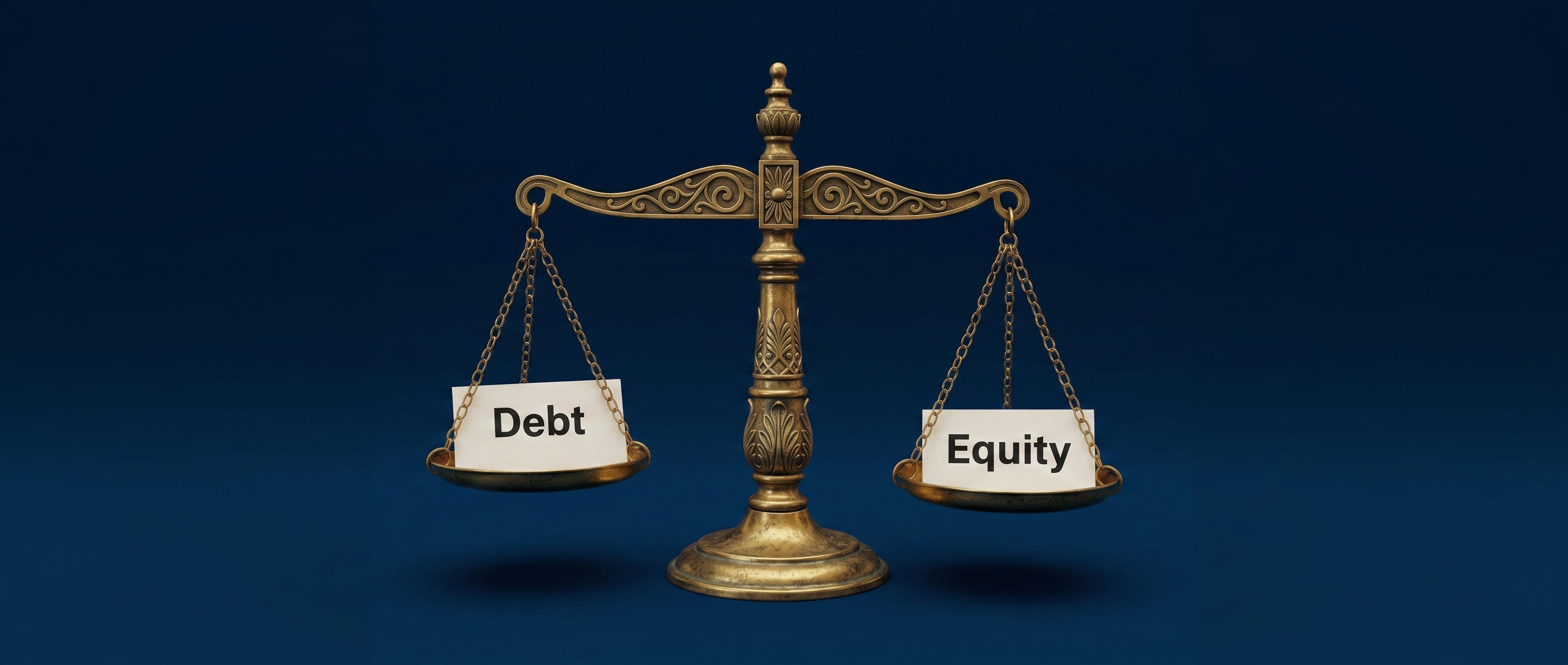
Equity has become the most prevalent way private companies raise money for growth: for many private companies, it is not one option of many, but the only capital-raising option they know. The mistake isn't in raising through equity itself, it's treating it as the only tool available. Debt and equity are not mutually exclusive; they are complementary tools meant to bring balance to a balance sheet. While equity funds unproven risks like early product development and market expansion, debt exists to fund proven track records, inventory turnover, and clear cash conversion cycles.
Determining which instrument fits or how to blend them comes down to three operational questions:
Understanding this balance is more critical now than it was a few years ago.
In the cycle of abundant capital, equity was relatively easy to raise. High valuation benchmarks set by equity investors made capital readily accessible, and when capital is easy to come by, the pressure to maintain a disciplined, efficient capital structure quietly disappears. High valuations gave a false sense of security, leading private companies to prioritize valuation headlines over capital efficiency.
That dynamic is shifting. As valuations across more liquid asset classes, such as public markets and real estate, undergo downward adjustments, the cost of equity is rising. Private market valuations eventually align with public realities, meaning equity is no longer the cheap, frictionless fallback it once was. Private companies can no longer rely on high valuations for inefficient capital structures; capital efficiency must take priority.
Private companies should prepare for both instruments early rather than scrambling when cash needs arise. The question was never whether debt or equity is inherently better. What actually matters is focusing on managing the overall capital efficiency of the business, matching the lifespan of the money to the lifespan of the need so growth doesn't require constantly giving away ownership.
